CONDITIONS GUIDE
Rainy-shift gear for delivery drivers
Prepare the vehicle, phone, order, clothing, and handoff routine before rain turns small setup failures into safety problems.
Rain changes stopping distance, visibility, grip, loading, and the condition of packages. Equipment can reduce friction in the workflow, but it does not make flooded or severe conditions safe. The first decision is whether to work at all.
Start with the vehicle
Inspect tires, wipers, washer fluid, lights, defrosters, and mirrors before the shift. Use the vehicle manufacturer’s tire-pressure specification. NHTSA advises slower driving and more following distance on slick roads, and says to turn around rather than enter flooded roads.
Protect the work system
| Area | What to prepare | Failure to prevent |
|---|---|---|
| Phone | Weather-resistant case or cover that preserves controls and charging | Wet port, blocked audio, lost navigation |
| Orders | Closed insulated bag and dry loading zone | Wet paper packaging and unstable carry |
| Driver | Water-resistant outer layer and footwear with suitable traction | Restricted movement or slippery steps |
| Vehicle | Secured absorbent cloths and cleanable containment | Loose wet items and spreading spills |
Do not seal a wet phone in a way that traps water against a charging connector, and do not connect power when the manufacturer warns that moisture is present. Keep plastic and covers away from vents, pedals, controls, and airbags.
Change the pickup and handoff routine
Park legally and avoid standing water where depth or surface condition is uncertain. Close the insulated bag before leaving shelter. Keep one hand available for balance on steps and do not rush because an order is getting wet. At the destination, confirm the correct dry placement through the app or customer instructions.
Set a stop-work boundary
Severe visibility loss, standing or moving water, unsafe wind, road closures, or a vehicle problem are reasons to stop or decline the route. Gear is not a substitute for safe conditions, local warnings, or platform procedures.
Rain-ready check
- Tires, lights, wipers, washer fluid, and defrosters work.
- Phone protection preserves safe mounting and controls.
- Orders can stay closed from pickup to covered handoff.
- Footwear and clothing allow normal movement and visibility.
- Wet items and cloths are secured away from controls.
- Floodwater and severe-weather stop rules are understood.
Evidence boundary
This is a research synthesis, not a ranking of rainwear, footwear, cases, or bags. Waterproofness, traction, breathability, visibility, and durability claims need category-specific and repeatable tests.
For low-light conditions, use the night delivery setup.
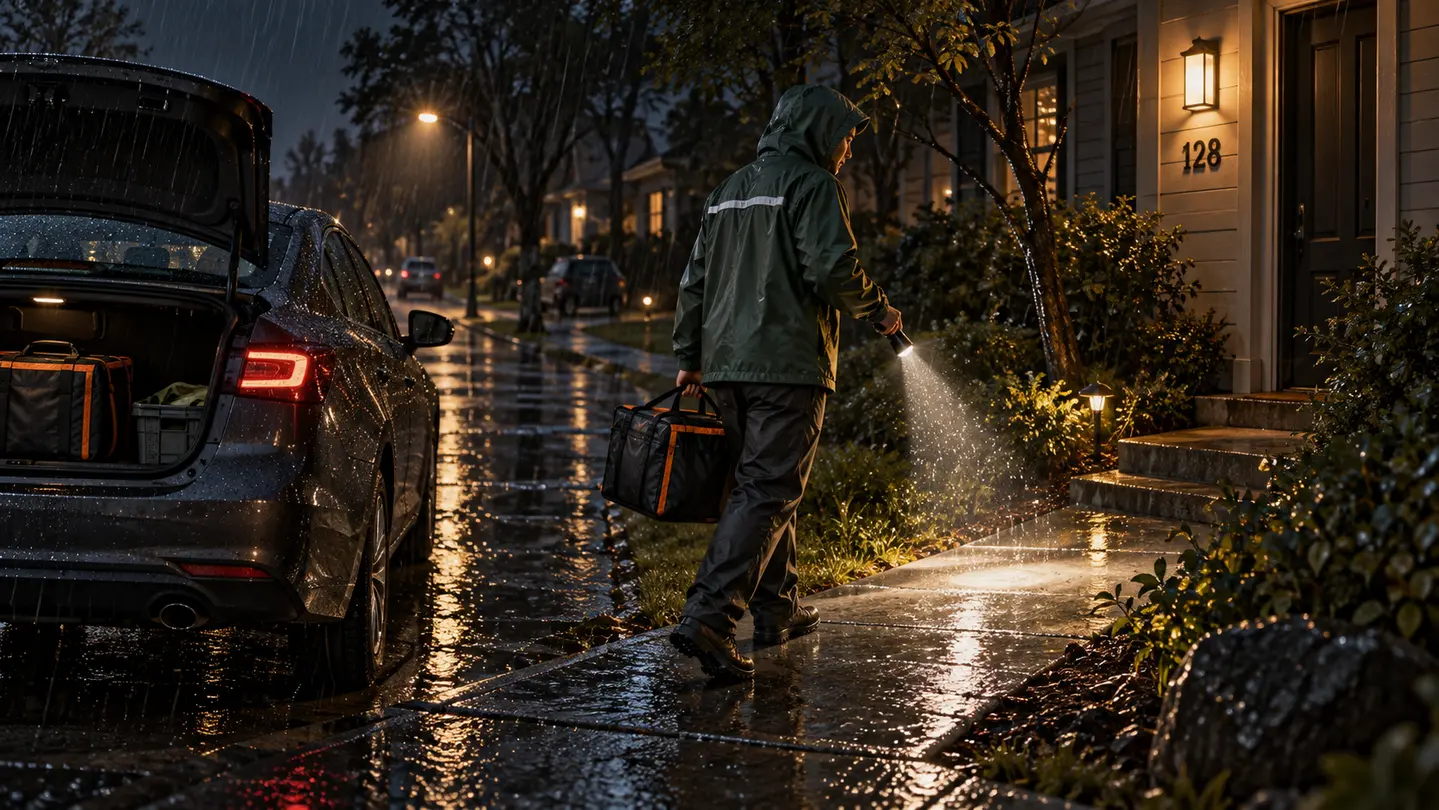
Manage water at boundaries
Rain problems concentrate where a driver moves between shelter, vehicle, and customer entrance. Design those transitions so the phone, package, footing, and vehicle interior are not all exposed at once.
Stage before opening the door
With the vehicle parked, confirm the route, close the order bag, secure the phone, and put on rain protection before stepping out. This reduces juggling and prevents open containers from sitting in rainfall.
Separate wet from clean
Assign a secured place for wet outerwear, towels, and used covers away from active orders. Moist equipment can transfer water and debris even after the rain stops.
Inspect traction, not just waterproofness
A dry foot is not necessarily a stable foot. Check tread condition, flexibility, fit, and performance on the surfaces you actually encounter; no footwear prevents every slip.
A waterproof jacket that blocks peripheral vision or restricts carrying posture can trade one problem for another, so fit and movement deserve a parked test.
Reader decision guide
| Question | What a useful answer includes |
|---|---|
| Is the vehicle rain-ready? | Check tires, wipers, washer fluid, lights, defrosters, mirrors, drainage, and the manufacturer’s tire-pressure recommendation. |
| What gets wet during transitions? | Map phone, charging port, bag opening, paper packaging, hands, clothing, footwear, door sill, and cargo surface. |
| Where do wet items go? | Create closed or cleanable containment away from active orders, driver controls, electronics, and dry backup gear. |
| When should work stop? | Severe visibility loss, unsafe wind, standing or moving water, road closures, or vehicle faults override delivery completion. |
Common mistakes
- Entering water when depth, current, road condition, or barriers are uncertain.
- Equating waterproof footwear with traction on tile, paint, metal, leaves, or polished concrete.
- Opening an order bag outside before the walking route and dry placement are ready.
Questions drivers ask
Should the phone be bagged in plastic?
Only if the cover preserves safe mounting, controls, cooling, and charging guidance and does not trap moisture against a connector.
Do reflective details guarantee visibility?
No. They may improve conspicuity under some lighting but do not replace lawful parking, attention, and traffic caution.
How should wet equipment be dried?
Follow its care instructions, separate it from customer-order zones, and inspect for retained moisture before reuse.
Sources and evidence notes
NHTSA — Driving in Severe WeatherOfficial guidance on slower travel, longer following distance, wet-road control, pedestrians, and floodwater.NHTSA — Winter Driving TipsVehicle-preparation guidance covering tires, wipers, defrosters, lighting, and emergency supplies.Found an error or outdated requirement? See our editorial and corrections policy.